Party-first real-time social video platform
Minglr
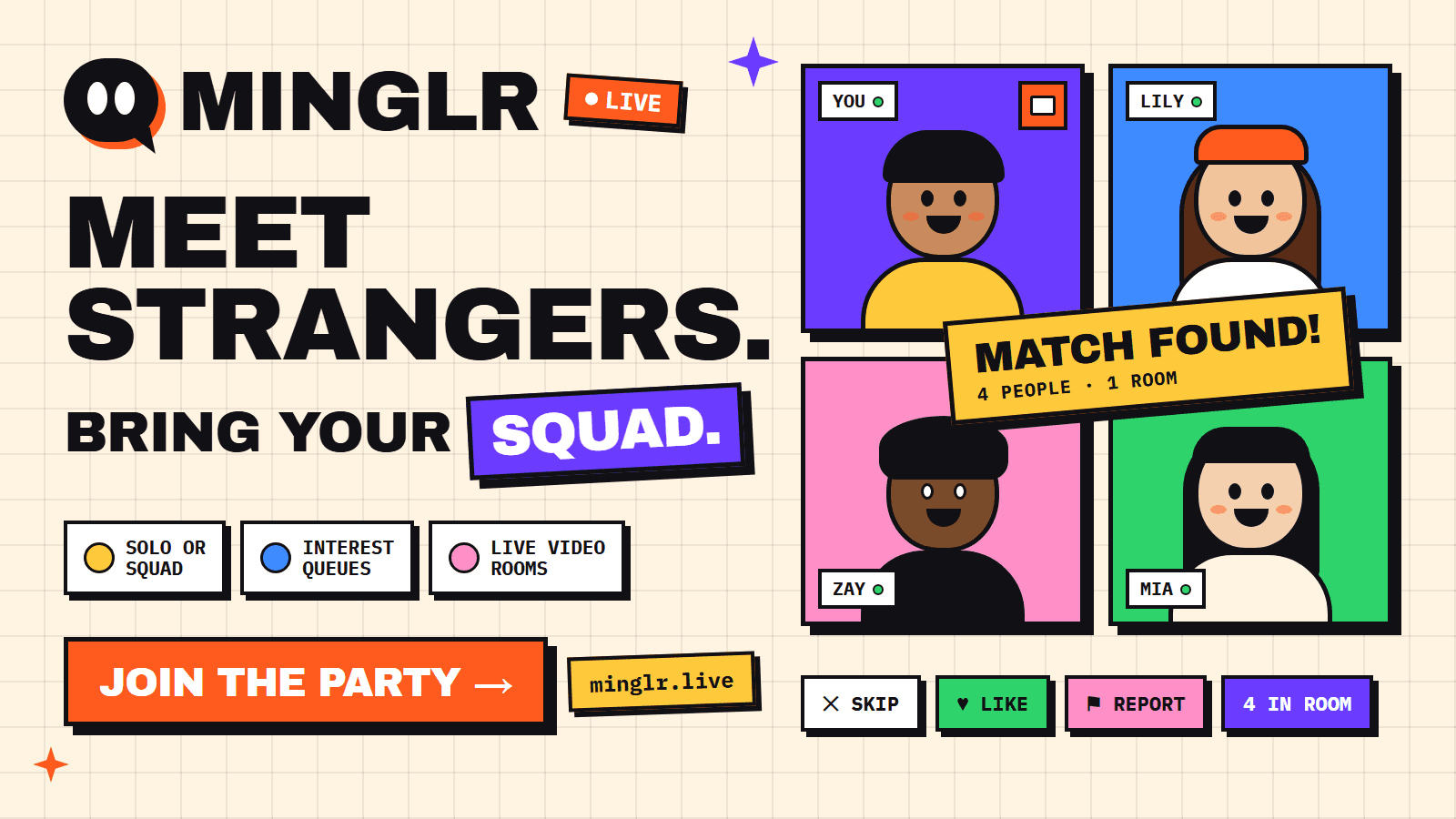
A party-first social video platform designed to match solo users and friend groups for spontaneous online conversations.
Problem or goal
Minglr explores a more social alternative to isolated one-to-one random chat, with interest-based queues, groups and moderated real-time interaction.
My approach
As co-founder and full-stack developer, I contributed to the responsive frontend, backend APIs and real-time features for presence, matching, rooms, messaging and safety-focused flows.
Key features
- Party and interest-based matching
- Real-time video rooms
- Messaging, notifications and presence
- Friend and group interactions
- Camera and microphone permission handling
- Responsive mobile experience
Technical highlights
- React and TypeScript frontend with Express APIs
- PostgreSQL, Redis and Socket.IO for application and real-time state
- Migration from LiveKit to mediasoup for video communication
- Room and matchmaking lifecycle management
- Authenticated frontend and backend flows
Testing and deployment
- Playwright end-to-end and video smoke-test documentation
- Deployment and self-hosted CI runner documentation
Challenges
- Coordinating matchmaking and active-room state
- Keeping events consistent across connected users
- Designing for both solo users and groups
Outcomes
- Built the foundation for a group-based social-video product
- Delivered real-time communication, matching and social features in one product
Lessons
- Real-time products need careful state, failure-handling and journey design.